We’re halfway through 2026, and the roads across Australia are moving faster than the rules written to govern them. All thanks to smart detection, AI-led route optimisations, and ‘aware’ vehicles that interact with each other and do much more than just drive you to your destination.
So, where does a traffic management consultant fit in these highly integrated traffic management systems? Let’s try to understand through this quick list.
Traffic Management Systems and Australia
If you ask what decades of study have taught us at AAA Traffic Control, it is that traffic volumes are climbing, urban corridors are tighter, and the margin for error is nonexistent.
From roadworks on the Hume Highway to construction zones in the Sydney CBD, Australian roads have never been more complex to manage.
Consequently, traffic management systems have had to evolve rapidly, with regulatory measures following suit rather than the other way around.
1. Adaptive Signal Control Removes Gridlock Before It Starts
Back in 2022, Melbourne’s Nicholson Street in Carlton became a live demonstration of what modern adaptive control looks like. The famous deployment serves as a perfect example of an intelligent transport corridor.
Unsurprisingly, a single lane closure can cause long traffic jams, but making immediate adjustments helps prevent queues from forming.
This approach reduces driver frustration, reduces emissions from idling cars, and keeps public transport running smoothly.
What this means for AAA Traffic Control: On roads where a single lane closure can trigger kilometres of congestion, shifting to dynamic control reduces incident risk, fuel wastage, and community disruption as well.
2. Smart Detection Systems Protect the People Most at Risk
Roadside work remains one of the most challenging environments for construction and maintenance crews. While trained traffic controllers play a critical role, technology is increasingly being used to provide an additional layer of protection.
In this case, radar-based detection systems monitor approaching traffic and identify vehicles behaving unexpectedly. This is where, if a vehicle enters a restricted area or approaches a work zone at risk of collision, alerts can be issued immediately to site personnel.
What this means for AAA Traffic Control: Combined with variable message signs and remote monitoring systems, these technologies help site supervisors respond quickly to changing conditions and maintain safer work environments.
3. Digital Spatial Modelling Guarantees First-Time Approvals
One of the most useful tools in modern traffic planning is swept path analysis, which uses digital modelling to show how different vehicles will move through a site.
This is particularly important when heavy vehicles, emergency services, or oversized loads need to pass through temporary traffic arrangements.
Also, well-thought-out Construction Traffic Management Plans specifically help meet Transport for NSW requirements and reduce the risk of delays when applying for ROLs.
What this means for AAA Traffic Control: Utilising this digital modelling, our planners can identify access issues early and adjust the design before it reaches the approval stage.
4. Modern On-Site Equipment Minimises Risks and Hazards
Another major shift in traffic management is the way equipment is being deployed. The goal here is to keep workers out of unnecessary danger wherever possible.
- Portable traffic signals, for example, can now be synchronised and monitored remotely, reducing the need for manual intervention in live traffic environments.
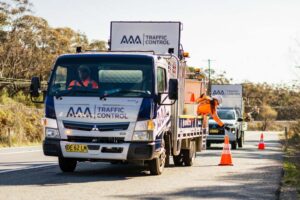
- At the same time, protective systems such as Truck-Mounted Attenuators, water-filled barriers, and temporary concrete barriers help create a safer separation between vehicles and work crews.
These technical upgrades make day-to-day site operations more controlled, especially on projects where traffic conditions change frequently or where working space is limited.
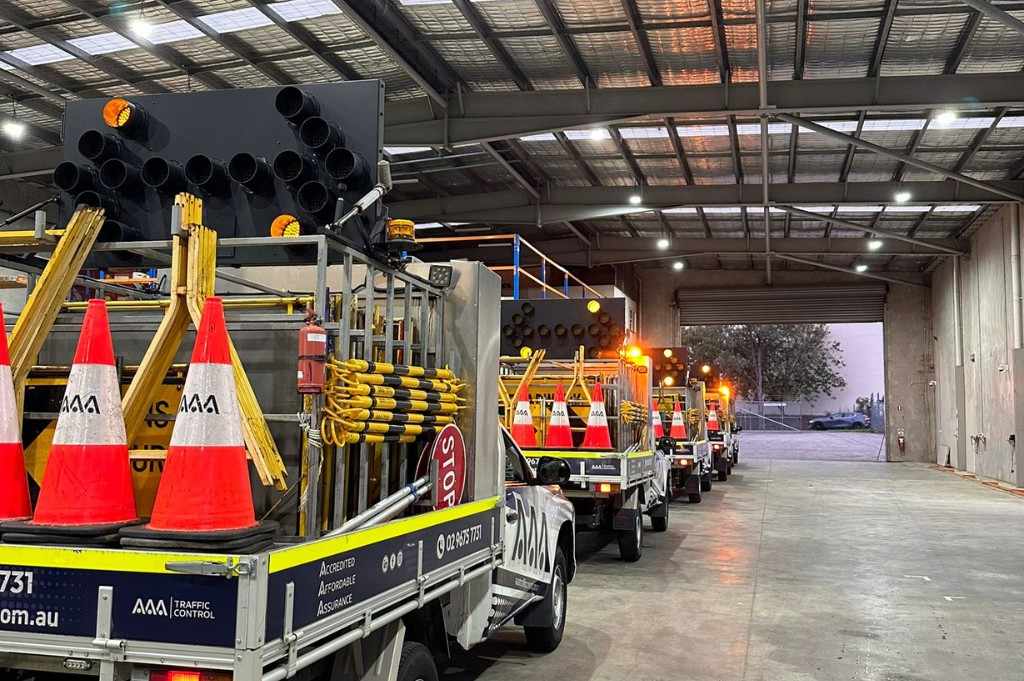
What this means for AAA Traffic Control: We maintain a state-of-the-art fleet to deliver these high-impact safety solutions 24 hours a day. This comprehensive equipment-hire service ensures your project meets the highest safety compliance standards.
Site Safety Matters
Deploying advanced transport hardware is only half the battle because true compliance requires a partner with deep local expertise and proper regulatory credentials.
- You need a traffic management consultant who holds a Transport for NSW Category G10 accreditation.
- This means qualified professionals who can manage everything from authority liaison to final site clearance safely.
In conclusion, a well-run site is usually the result of strong systems supported by qualified professionals who know how to apply them in the real world. And this is where capability statements help.
We’ve learnt that in 2026, modern traffic management is about more than control and coordination. The best results come from combining accurate planning, intelligent technology, and on-ground expertise.
It is not just about having tech at your disposal; it is about understanding its utility and application when a situation demands it at any given moment. To know more about how we do it, head here or dial (02) 9675 7731.
FAQs
Q. What role does artificial intelligence play in modern traffic control?
Instead of forcing operators to watch hundreds of camera screens at once, smart software scans live highway feeds to spot problems instantly. The system then flags stopped cars, minor crashes, or road debris right away. This allows control rooms to change overhead electronic signs and close lanes before a small breakdown turns into a massive gridlock.
Q. What tech is used to keep road crews safe on the ground?
We use portable radar sensors and perimeter alarms that keep a constant watch over the edges of a worksite. If a vehicle veers past the cones or approaches at an unsafe speed, our traffic management experts are immediately alerted.
Q. How does digital swept path analysis prevent road blockages?
It is basically a digital test run for big trucks and buses. Before we put a single barrier on the road, our design software simulates the exact turning circles of semi-trailers, public buses, and fire engines. This guarantees large vehicles can fit through our tight detours without scraping panels or getting stuck.
Q. What are automated incident detection systems?
These are smart camera networks that watch out for sudden changes in highway traffic patterns. If a car slams on its brakes, swerves violently, or stops completely in a live lane, the system catches it instantly. It alerts control rooms straight away so they can dispatch emergency services or tow trucks faster.