Filing a development application or preparing a busy construction site in Sydney can surely be tedious. Juggling engineering drawings, environmental checks, and council paperwork, securing sign-off for road access is indeed overwhelming. Add to that, if there’s a minor error or an honest oversight when you want the traffic unhindered, the rejection of traffic management plans only adds to your frustration.
To help you understand the reasons behind the plan’s rejection, AAA Traffic Control experts share some insights on getting an approval.
Common Reasons For Rejecting Traffic Management Plans
Assessors review hundreds of traffic submissions every month. The vast majority of rejections stem from repeatable, avoidable errors in design and administrative compliance.
1. Overreliance on Generic Templates Without Site Context
One of the quickest ways to trigger an immediate rejection is to submit a standard diagram that ignores our actual street conditions.
- Inability to map precise lane widths, kerb lines, median strips and active driveways.
- Overlooking existing street furniture, active bus stops, clearways, or nearby pedestrian crossings.
- Reusing traffic control diagrams from previous projects without adjusting for location specific road environments.
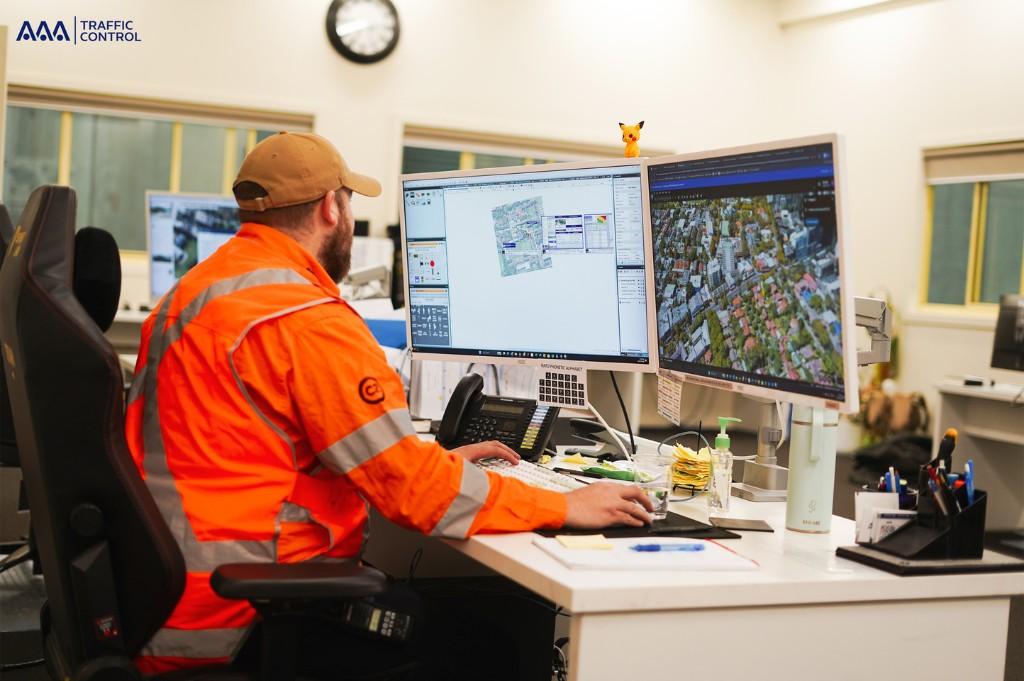
Possible Resolution: AAA Traffic Control experts can devise a dedicated plan by conducting on-site physical surveys alongside high resolution aerial imagery to map exact lane dimensions, kerb lines, bus stops, clearways and surrounding infrastructure with total spatial accuracy.
2. Inadequate Provision for Pedestrians and Cyclists
Road users must always receive the same level of protection as motor vehicles.
- Directing pedestrians onto live roadways without continuous, crash tested physical barriers.
- Creating temporary footpaths that fall below minimum width requirements.
- Failing to maintain accessible, step-free routes for wheelchairs, prams, and vision-impaired pedestrians.
Possible Resolution: AAA Traffic Control experts can integrate continuous accessible pedestrian paths into every scheme, incorporating regulatory requirements to guarantee complete separation from live traffic streams.
3. Omission of Swept Path Analysis
If your project involves large delivery trucks, mobile cranes or even concrete pumps, assessors require clear proof of vehicle manoeuvrability.
- Omitting swept path analysis engineered to Australian Standards.
- Failing to prove heavy vehicles can enter and exit the site in a forward direction without crossing into opposing lanes.
- Diagrams showing trucks mounting footpaths or clipping overhead utility structures during turning manoeuvres.
Possible Resolution: AAA Traffic Control experts can use specialised swept path simulation software to model heavy vehicle turning templates against our national standards.
4. Non Compliance with TfNSW and Australian Standards
Traffic designs must adhere strictly to Australian Standards and the TCAWs manual. Even minor geometric mathematical errors here can lead to rejection.
- Incorrect taper lengths for merging traffic relative to the posted speed limit.
- Inadequate buffer zones separating active work areas from live traffic lanes.
- Non standard signage, incorrect sign spacing, or improper device placement distances.
Possible Resolution: Thanks to the G10 certification, we at AAA Traffic Control can use specialised swept path simulation software to model heavy vehicle turning templates against our national standards.
5. Timing Conflicts and Road Occupancy Licence Missteps
Work proposed during peak hours or near our critical infrastructure is subject to heightened scrutiny.
- Attempting lane closures on major arterial roads during morning or afternoon peak hours.
- Ignoring strict speed reductions and time restrictions in active school zones.
- Failing to secure a Road Occupancy Licence from the Transport Management Centre when working within 100 metres of traffic signals or on classified State Roads.
Possible Resolution: AAA Traffic Control team can stage works outside peak hour embargoes while directly liaising with local councils and the Transport Management Centre. This helps in securing all the ROLs seamlessly.
Ensure Swift Approvals for Traffic Planning
It is evident that navigating complex regulatory frameworks requires experience, dynamic knowledge and local expertise. This is where working with a dedicated partner like AAA Traffic Control makes all the difference.
With over two decades of industry experience across Greater Sydney and regional NSW, our team at AAA Traffic Control delivers comprehensive traffic planning solutions built for immediate compliance.
If you are facing any hurdles with a project revolving around Sydney’s arteries, help is just one call away at (02) 9675 7731.
FAQs
1. What is the difference between a Traffic Management Plan and a Traffic Guidance Scheme?
A Traffic Management Plan is a strategic written report outlining the overall risk assessment, impact management, and operational framework for road safety. A Traffic Guidance Scheme, previously referred to as a Traffic Control Plan, is the actual technical diagram illustrating where signs, cones, barriers, and controllers are positioned on site.
2. How long does it take for a local council to approve a Traffic Management Plan?
Standard council assessment times generally range between 7 and 15 business days whereas complex applications involving full road closures or major arterial corridors can extend review times to 6 or 8 weeks.
3. Is a Traffic Management Plan required for a Development Application?
Yes, local councils across Australia frequently mandate a Construction Traffic Management Plan as a key condition of Development Application approval whenever construction activities alter normal road or footpath access.
4. What is the difference between a Traffic Control Plan and a Traffic Guidance Scheme?
A Traffic Control Plan is the historical term previously used across New South Wales. The official terminology across Australia under the current national framework standards is now Traffic Guidance Scheme.
Stay Updated with AAA Traffic Control
Make AAA Traffic Control a preferred source on Google for relevant traffic management insights, industry updates and useful information.