If you’re a utility contractor working on NSW roads or footpaths, gas, water, telco or electricity, traffic management isn’t a box you tick once and forget.
Utility works need a compliant TGS or TMP built to latest standards and the current TCAWS Manual. A G10-registered business, PWZTMP-qualified designers and carded traffic controllers are among some of the requirements that need to be complied with.
In this week’s piece, we’ll discuss them with an insight from Amir Imam, our Managing Director at AAA Traffic Control.
Quick Reference for Utility Contractors
| Requirement | Applies To | Governing Body |
| Traffic Guidance Scheme (TGS) | Short, low-impact works | TfNSW / Council |
| Traffic Management Plan (TMP) | Multi-day or flow-altering works | TfNSW / Council |
| G10 Registration (Category G) | Businesses performing traffic control | TfNSW |
| PWZTMP Qualification | TGS/TMP designers | SafeWork NSW |
| Traffic Control Training Card | Every on-site controller | SafeWork NSW |
| Road Occupancy Licence (ROL) | Works on state roads | TfNSW |
| Council Permit | Works on local roads | Local Government Area |
1. Work Out What Kind of Job You’ve Got
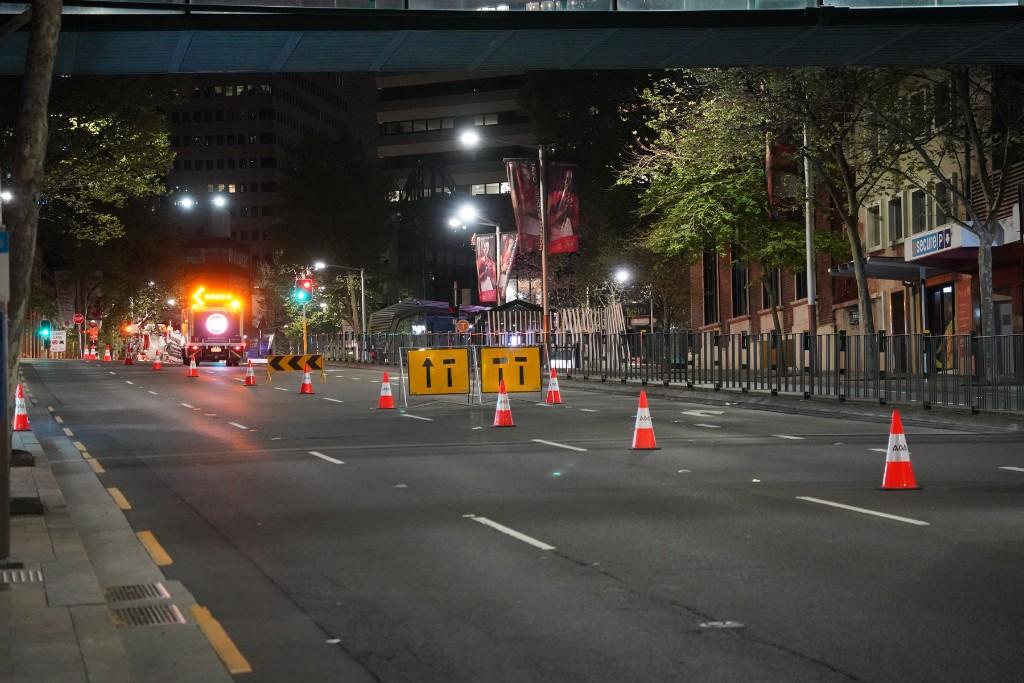
Most utility jobs like a pit inspection, a small water main patch, or a telco duct repair need a Traffic Guidance Scheme (TGS). It is the site-specific layout showing where every cone, sign and controller sits.
Works that change traffic flow, span multiple days, or are near a bus route or school fall into Traffic Management Plan (TMP) territory. Notably, large scale projects may also require a Construction TMP.
Matching the wrong document to the job is one of the most common reasons plans bounce at review.
2. Know Where Your Exemption Actually Ends
Utility providers generally don’t need standard road-opening approval under the Roads Act because that right is usually built into the statutory licence. But the exemption is about digging, not traffic.
Every provider is still expected to manage traffic control to AS 1742.3 as the baseline, with TfNSW layering its own requirements through the TCAWS Manual on top.
Simply, the pit in the ground might be exempt, but the cones, signs and controllers around it are not.
3. Design to the Right Standard
Interestingly, AS 1742.3 also sets the legal minimum for how a work site is signed and controlled.
TfNSW’s Traffic Control at Work Sites (TCAWS) Manual builds on that with its own approved layouts and placement rules, revised often enough that an old reference is a real risk.
⚠️AAA Traffic Control Insight: TfNSW refreshed its traffic control specifications in Jan 26’. A TGS built against a superseded version might be rejected at the approval stage even when the layout itself is sound.
4. Get the Right Person Designing It
PWZTMP or Prepare Work Zone Traffic Management Plan is still widely known as the Red Card.
A TGS or TMP can only be legally designed, selected or modified by someone holding a current PWZTMP qualification. If there’s no PWZTMP-qualified person on hand to adjust a scheme beyond its stated tolerances, the correct call is to pause the site rather than improvise.
Inspectors treat an uncertified change to an approved TGS about as seriously as having no TGS at all.
5. Register the Business and Card Every Worker
Any business carrying out traffic control work needs to be registered with TfNSW under Registration Scheme Category G, governed by the G10 specification, separate from whatever qualification individual workers hold.
The WHS Regulation 2025 also gave traffic control its own dedicated part of the law, requiring every controller to carry a current SafeWork NSW training card and to have refreshed their training or worked the role within the past two years.
To sum up this one, traffic control workers need to possess and produce that card on request.
6. Line Up Your Permits Before You Book the Crew
Once your TGS or TMP is approved, you’ll usually still need a separate occupation permit. It is a Road Occupancy Licence (ROL) from TfNSW for state roads, or a council permit for local roads.
Utility jobs often straddle both in a single project, and approval from one authority won’t automatically satisfy the other.
And this is where you need a traffic management consultant who can make it all quicker and more systematic for you.
⚠️AAA Traffic Control Insight: Works within 100 metres of traffic signals almost always need an ROL regardless of classification, so confirm jurisdiction before you lodge anything.
Bonus: What Others Miss that You Shouldn’t
Once your TGS or TMP is approved, state roads require a ROL from TfNSW, while local council roads require municipal permits.
It is important during booking to confirm that every worker on site carries:
- Current C Class manual driver licence alongside a valid SafeWork NSW Construction Induction Card, widely known as a White Card.
- RIISS00054 Traffic Controller Skill Set and RIISS00055 Traffic Management Implementer Skill Set accreditations.
- RIISS00056 Traffic Management Designer Skill Set for Red Card supervisory staff.
- Minimum 2 years of active traffic management experience paired with a dedicated TMA vehicle fleet.
- Proven capability to interpret complex road traffic diagrams, follow site safety regulations and communicate it all clearly.
This alignment keeps your job moving and protects you from sudden site shutdowns or heavy WHS penalties.
Amir Imam on Getting It Right the First Time
“The utility jobs that run smoothly are almost always the ones where traffic control was planned before the first shovel went in, not after the first complaint came in,” says Amir Imam, our Managing Director at AAA Traffic Control.
He adds, “…the digging exemption makes people assume the whole job is exempt. It isn’t. The sites that get shut down usually aren’t the ones with a bad plan. They’re the ones with no plan at all, or the wrong edition of one. A 5-minute check on which document you actually need saves a lot more than just 5 minutes on site.”
How AAA Traffic Control Can Help
We have learnt that while utility contractors are largely exempt from standard road-opening approval under the Roads Act, that exemption stops at the edge of the pit. Everything around it still has to satisfy Transport for NSW (TfNSW) and SafeWork NSW in full.
Utility traffic management in NSW rewards contractors who plan the document before hitting the shovel, not after.
And that is why our team at AAA Traffic Control designs TGS and TMP documentation, manages ROL and council permit lodgement, and puts G10-registered, PWZTMP-qualified crews on site. Get in touch before your next job goes to plan.
FAQs
Q. Why do authorities reject traffic guidance schemes during review?
Rejections usually happen due to outdated standard references, inaccurate street measurements, missing signal distances and even inadequate pedestrian protection measures.
Q. Is it acceptable to reuse a traffic plan from a previous project?
Reusing old plans is risky because site conditions, traffic volume and state specifications change over time. Transport for NSW frequently updates standards, making old templates obsolete.
Q. Do utility contractors need council approval to dig up a road in NSW?
The utility and service providers usually hold a statutory exemption from standard road opening approval under the relevant Roads Act. That is why traffic control obligations remain separate and apply in full. So, generally no.
Q. What’s the difference between a TGS and a TMP?
A TGS is the physical layout of signs, cones and controllers for a site. A TMP is the broader plan covering access, staging, hours of work and stakeholder impact, needed when works significantly affect traffic flow.
Q. Who can legally design a Traffic Guidance Scheme in NSW?
Only someone holding a current PWZTMP qualification from SafeWork NSW.
Q. Can emergency utility repairs begin before receiving permit approval?
Emergency works, such as burst water pipes or gas leaks, can begin immediately under emergency protocols. However, the TMC must be informed promptly and with formal permits if work exceeds 24 hours.
Q. What action should workers take if traffic queues become too long?
Unauthorised changes to cone layouts or signal timing are illegal. Workers must contact a qualified traffic designer to adjust the site layout safely and legally.
Stay Updated with AAA Traffic Control
Make AAA Traffic Control a preferred source on Google for relevant traffic management insights, industry updates and useful information.