An expert Traffic Management Plan adapts to evolving worksites, protects people, supports productivity and maintains community confidence. It is particularly important as construction sites in Sydney are where tight deadlines meet heavy vehicles and risky situations. This is why dedicated Traffic Management Plansare becoming an essential prerequisite at responsible construction sites. This article will help you understand how each of these elements works in real projects and why they matter.
1. How Do You Keep Roads Safe When Construction Changes Everything?
With a clear and accurate traffic guidance scheme designed by experts.
The moment barriers go up and machinery rolls in the road environment becomes unpredictable. Pedestrians, cyclists and motorists often react in ways the contractor did not expect. In such cases, an effective traffic management strategy always starts with a precise Traffic Guidance Scheme (TGS) that maps how traffic will flow around the worksite.
This includes:
- Placement of Portable Traffic Control Devices
- Temporary speed zones
- Signage sequences
- Dedicated pedestrian diversions
- Barrier systems suited for risk level
It is also important that the TGS drawings are in line with TCAWS requirements and local NSW conditions. Also, Swept Path Plans for heavy vehicle turns and Vehicle Movement Plans ensure that the entire worksite has predictable and safe movement zones.
2. Why Do Approval Delays Slow Down Construction So Often?
Because the firm didn’t opt for Full Permit Management that removes bottlenecks.
Many projects across Australia lose days or even weeks because required approvals were not lodged early or correctly. Without the right documentation a Traffic Management Plan or a Traffic Guidance Scheme cannot proceed. AAA Traffic Control supports contractors and councils by managing:
- Road Occupancy Licences (ROL)
- Local council permits for footpaths and kerbside works
- STA bus stop amendments
- Emergency service notifications
An experienced team prepares approval-ready TGS drawings, compliance notes and supporting documents so authorities can sign off without delay. This keeps not just contractors and authorities like yourself but even residents aligned with the project schedule.
3. What Happens When Drivers Become Confused or Congested?
Smart Traffic Setups with Trained Controllers on the Ground are to the rescue!
When drivers do not understand what is happening, safety declines. Confusion leads to rapid braking, queue build-ups and unsafe merging. A strong Traffic Management Plan must consider real driver behaviour where the safety can be enhanced through:
- Variable Message Signs (VMS) that alert motorists well before the disruption
- Arrow boards for clarity during lane separations
- Night-time light towers for visibility
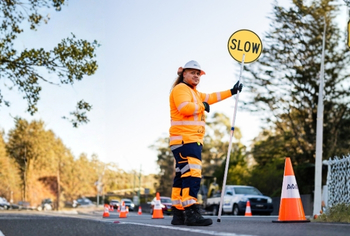
- Trained and accredited Traffic Controllers (TCs) to direct flow
- Senior supervisors and TMA operators for high-risk closures
This combination reduces frustration and provides predictable movement through the worksite.
???? Did you know? For high-volume areas in Western Sydney these measures often make the difference between smooth flow and a traffic snarl.
4. How Do You Manage a Worksite That Changes Every Day?
Adaptive Plans and regular On-Site Safety Audits are extremely important for construction sites.
Construction projects evolve stage by stage. A safe design on week one may not be safe on week three. AAA’s data-backed traffic guidance scheme solves this through active monitoring.
Our supervisors conduct Work Zone Safety Audits, adjust signs, reposition barriers and update pedestrian routes based on real-time conditions. We maintain continuous communication with site crews and authorities so the Traffic Management Plan reflects changing risks.
This adaptive model greatly reduces incidents, non-compliance notices and community complaints.
5. How Do You Keep Multiple Stakeholders Informed Without Confusion?
Clear Protocols are built into a robust traffic guidance scheme
Every construction project involves a blend of partners. Councils, utility providers, contractors, emergency services and residents all need timely information. Here, it is important to embed communication protocols in each plan like:
- Contact lists for incidents
- Notification routes for unexpected shutdowns
- Briefing procedures for contractors and subcontractors
- Community information for high-impact works
This structured communication keeps everyone aligned and prevents misinformation or last-minute panic.
6. What About High-Risk Zones That Require Extra Protection?
Specialist Safety Equipment and Accredited Operators add a layered security.
Some worksites demand extra layers of protection due to the unique environments, hi-speed movement, narrow corridors or heavy freight movements.
AAA Traffic Control supplies and operates:
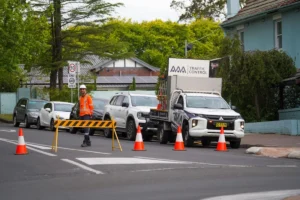
- Truck Mounted Attenuators (TMAs)
- Concrete and water-filled barriers
- Pedestrian barriers for event-style foot traffic
- Portable traffic lights
- Pod trucks and traffic utility vehicles
- High-visibility Portable Traffic Control Devices
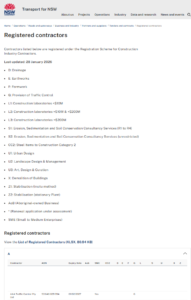
Every piece of equipment is compliant with NSW safety frameworks and latest legislations so that your construction site does not face any hurdle. .
What Truly Makes a Great Traffic Management Plan?
A great Traffic Management Plan keeps people safe, protects the project timeline and reduces community disruption. It blends design, compliance, communication and on-ground delivery into one coordinated package. And AAA Traffic Control has spent more than two decades refining the process and excelling at handling situations where the margin for error is small and catastrophic.
As a trusted traffic management consultant, we offer Traffic Management Services that cover planning, approvals, equipment, accredited crews and constant monitoring. Every assigned team from AAA Traffic Control ensures your construction site is secured and objectives are achieved.
Call us at (02) 9675 7731 to know howcontractors and public authorities in Sydney benefit from certainty and confidence from day one.
FAQs
Q. How do Traffic Controllers support beyond directing cars?
They monitor hazards, communicate with site supervisors, update signage, adjust pedestrian routes and provide rapid responses when conditions shift unexpectedly.
Q. What role does data play in modern construction traffic management?
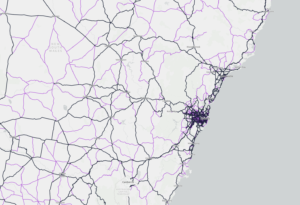
Traffic volumes, peak-hour patterns and incident trends help refine lane closures, optimise timing and design smarter diversion routes before work begins.
Q. Why is early traffic planning critical for government-funded projects in Australia?
Government projects face strict compliance cycles. Early planning prevents re-submission delays, supports community engagement and ensures documentation aligns with procurement and safety frameworks.
Q. Can I update my Traffic Management Plan after construction begins?
Yes. TMPs are living documents and must be updated whenever staging, risks, vehicle access or community conditions change. You can discuss further on how it will affect your quote by speaking directly with our experts.