If you have ever driven through roadworks in Greater Western Sydney and wondered why everything feels chaotic, chances are the traffic management was not done correctly.
From outdated plans to unclear signage, small mistakes can turn a simple job into a frustrating or even dangerous experience. Our blog will demonstrate how these problems arise and how professional traffic management helps you avoid them.
1. Relying on Outdated Traffic Guidance Plans and Inviting Risk of Non-Compliance
⚠️Typical approach
Many crews still rely on old Traffic Control Plans (TCPs) saved from previous jobs. These plans may not reflect new road layouts or current council requirements.
For government authorities and commercial contractors, this exposes the project to liability and stoppages. Additionally, this can lead to illegal setups, unsafe pedestrian routes, and breaches of TfNSW expectations.
✅Professional approach
A qualified planner prepares a site-specific Traffic Guidance Scheme (TGS) reflecting current traffic behaviour, lane widths, bus routes, and emergency access needs. It includes many aspects such as correct device spacing for speed management, pedestrian paths, and access for emergency services.
This keeps crews compliant and reduces last-minute changes that slow the job.
2. Are Permits and Approvals Being Neglected?
⚠️Typical approach
Contractors often presume that a minor lane shift or shoulder closure might not require council permits or Road Occupancy Licences. This usually leads to surprise stoppages, especially on narrow roads across the Blue Mountains region.
✅Professional approach
A specialist team manages Road Occupancy Licences, STA approvals, emergency access notices and council permits early. This ensures all documentation is approved before the first sign is placed.
With it, projects avoid shutdowns and penalties, ensuring a smoother workflow and fewer infractions for unauthorised works.
3. Using Unaccredited Controllers
⚠️Typical approach
On smaller regional NSW projects, some crews place workers without TfNSW or TMI accreditation on active roads. They may not understand flow control, hazard response, or safe positioning near fast-moving traffic.
✅Professional approach
A fully accredited team understands NSW road conditions, site risks, and the correct techniques that are backed by a prudent psyche. This is particularly applicable to risky corridors such as Parramatta Road and Princes Motorway.
To address it, adjustments are made quickly during unexpected surges or emergencies.
4. Using Incorrect or Insufficient Equipment
⚠️Typical approach
Sometimes, crews rely on faded signs, incorrect cone spacing, or small arrow boards that are not suited for high-speed environments. This confuses the motorists and increases hazards during night work.
✅Professional approach
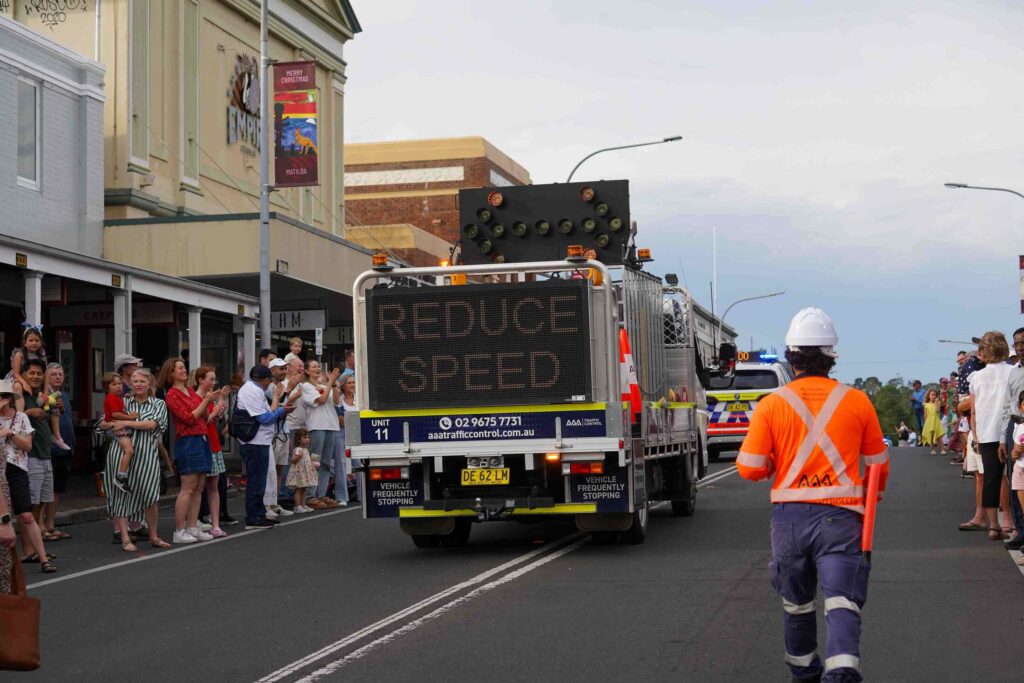
Selecting compliant devices such as TMAs, PTCDs, VMS boards, water-filled barriers and lighting towers that are matched to speed limits and local conditions. These devices meet TCAWS and Australian Standards for visibility and durability.
Correct equipment improves visibility, reinforces risk containment, and reduces the chances of worksite hazards, protecting both road users and project stakeholders.
5. Are Works Scheduled Without Understanding Traffic Patterns?
⚠️Typical approach
Some contractors pick times that suit their internal schedule rather than real conditions. Running these activities during morning peak or school traffic can cause gridlock and generate community backlash. Councils may even issue stop notices and impose fines totaling thousands of dollars.
✅Professional approach
Professional traffic management in Sydney uses real-time traffic flow data, seasonal patterns, and event schedules to choose low-impact time windows.
The outcome? Road users experience less frustration, local access remains open, and projects continue with fewer disruptions or complaints.
6. Is Communication Being Overlooked?
⚠️Typical approach
When businesses, residents, or bus operators are not notified in advance, confusion and frustration escalate quickly. Unexpected closures can spark public complaints, media attention, and direct intervention from authorities; the last thing anyone would desire.
✅Professional approach
Professional traffic management services include advance notifications, clear detour messaging, and updates for bus services, emergency responders, and nearby businesses.
This way, stakeholders understand what to expect, reducing disputes, and your projects benefit from smoother acceptance and fewer last-minute challenges.
7. Weak Incident Response and No Contingency Planning
⚠️Typical approach
Without a contingency plan, crews panic and completely freeze when a crash, spill, or breakdown occurs near the site. This chaotic response elevates the harm and exposes your project to severe scrutiny.
✅Professional approach
AAA Traffic Control provides 24/7 emergency response crews with highly effective protocols for accidents and spills. This reduces downtime and enhances public safety.
This is all possible thanks to an emergency response plan and a rapid-deployment team on standby.
8. Neglecting Maintenance of Equipment and Fleet
⚠️Typical approach
Some operators overlook servicing their TMA trucks, lighting towers, or VMS boards. The problem arises when faults appear mid-shift, halting important work such as rail upgrades or utility repairs.
✅Professional approach
In such cases, professional traffic consultants like us maintain a disciplined service schedule for our fleet and devices. Everything is checked before dispatch to avoid failures on-site.
The well-maintained fleets reduce breakdowns, prevent safety hazards, and strengthen reliability for long-term government and commercial partnerships.
Traffic Management Mistakes Affect More Today
2024 was Australia’s worst year in decades when it came to road fatalities, making professional traffic management more critical than ever.
Data reveals that increased road deaths is causing concern from industry bodies.
In such cases, experienced traffic management consultants help you reduce crash risk by up to 30% or even more. This also improves the PR while also increasing your chances of acquiring future projects in NSW.
Avoid Costly Mistakes with the Right Expertise
Traffic management is more than placing cones on the road. It requires planning, compliance, communication and guidance from the right people.
For councils, government teams, and private contractors, partnering with a professional provider like AAA Traffic Control reduces risk and strengthens project outcomes. We bring you years of experience and nearly 12,000 successful projects across NSW that have helped the government authorities and commercial partners.
With expertise in TGS design and planning, AAA Traffic Control team delivers responsible traffic management services. Contact us to secure your work across NSW.
FAQs
Q. What is the most common cause of traffic management failure at NSW worksites?
Outdated or incomplete Traffic Guidance Schemes are the biggest cause, as they lead to unsafe layouts, non-compliance, and confusion for motorists and workers.
Q. How do unaccredited traffic controllers increase project risk?
They might misjudge live traffic conditions or even breach the safety rules. This exposes contractors and authorities to liability and escalations.
Q. How can I tell if a roadwork site is set up properly?
Look out for consistent signage spacing, visible controllers and safe pedestrian paths. A well-managed site feels predictable, not confusing.
Stay Updated with AAA Traffic Control
Make AAA Traffic Control a preferred source on Google for relevant traffic management insights, industry updates and useful information.